
How common is dental disease in cats and dogs?
Dental disease is the most common disease that we see in our pets.
What is dental disease?
Dental disease follows a progressive course. The teeth surface is constantly exposed to bacteria in the mouth called plaque. Unlike gums, which are constantly shedding dead cells (like your skin), teeth are surrounded by hard enamel which does not shed. This means once plaque sticks to a tooth, it is hard to get off. Within 48hours of sticking to the tooth, plaque bacteria then form a protective biofilm to help it stick even more. This biofilm then hardens over time to form tartar, which is a brown stone-like substance which is very irritating to the gums.
Inflammation of the gums, called gingivitis, will develop because of plaque and tartar accumulation. This inflammation then spreads to the bone and ligament holding the tooth in place, which can be very painful and can allow bacteria to spread to vital organs such as the kidneys, liver and heart.
There are 4 stages of dental disease
- STAGE 1 (gingivitis) Inflammation and possible swelling of the gum line.
- STAGE 2 (early periodontitis) The gum bleeds when prodded. In this state it will provide less support to the tooth. The mouth will be painful, and odour begins to be noticeable.
- STAGE 3 (established periodontitis) The gum recedes away from the tooth, providing even less support. The mouth is very sore which can affect eating and behaviour. Bad breath is present.
- STAGE 4 (advanced periodontitis) Chronic bacterial infection is destroying the gum, tooth and surrounding bone. Bacteria can spread throughout the body via the blood and may damage the kidneys, liver and heart.
Are all animals equally at risk to dental disease?
Some animals appear to be more at risk than others. There are different factors including genetics, diet, and the shape of the mouth. Small/toy breeds and those with a shorter nose are more at risk. Dogs that like to chew a lot are less at risk.
What should we do to check our pet’s teeth?
We advise that your pet’s teeth are regularly checked. Do this by gently lifting the lips to examine the teeth and gums. The teeth should be shiny and white and the gums a pale pink colour. You should detect very little dental odour. We recommend you have your pet’s teeth checked every six months. The dental clinics at Oakhill Vet Group are FREE of charge!
How should we look after our pet’s teeth?
There are many things that you can do to help:
- Brushing : Just like us, brushing teeth DAILY is the gold standard for keeping dog’s and cat’s teeth clean and healthy. Obviously, this is easier with some pets than others. Use toothpastes which are specifically formulated for pets and softer brushes like a baby or children’s brush. Be aware that fluoride, found in human toothpaste is toxic to pets. Please ask a member of the Oakhill Team to help you get started.
- Chewing: The more your pet chews the better. Animals that receive a dry diet usually have better teeth than those on a tinned diet. Specialist dental foods are available which are designed to help rub the plaque off. Giving raw-hide or dental chews is also a good idea (under supervision). These stimulate saliva which protects the teeth as well as physically rubbing the teeth and cleaning them.
- Antibacterial gels and wipes: These can be put in your pet’s mouth after eating. This is the animal equivalent to mouth wash and is a good second best to brushing. It is important to only use mouth gels and washes designed specifically for animals.
- Water or food additives: There are many products that can be added to your pet’s food or water to help reduce plaque. Look for the VOHC seal of approval.
- Advanced dental care: Sometimes dental disease is too advanced for brushing and the other care managements above. In these cases, a thorough dental assessment is required, under general anaesthesia. In some situations, badly diseased or damaged teeth may require removal.
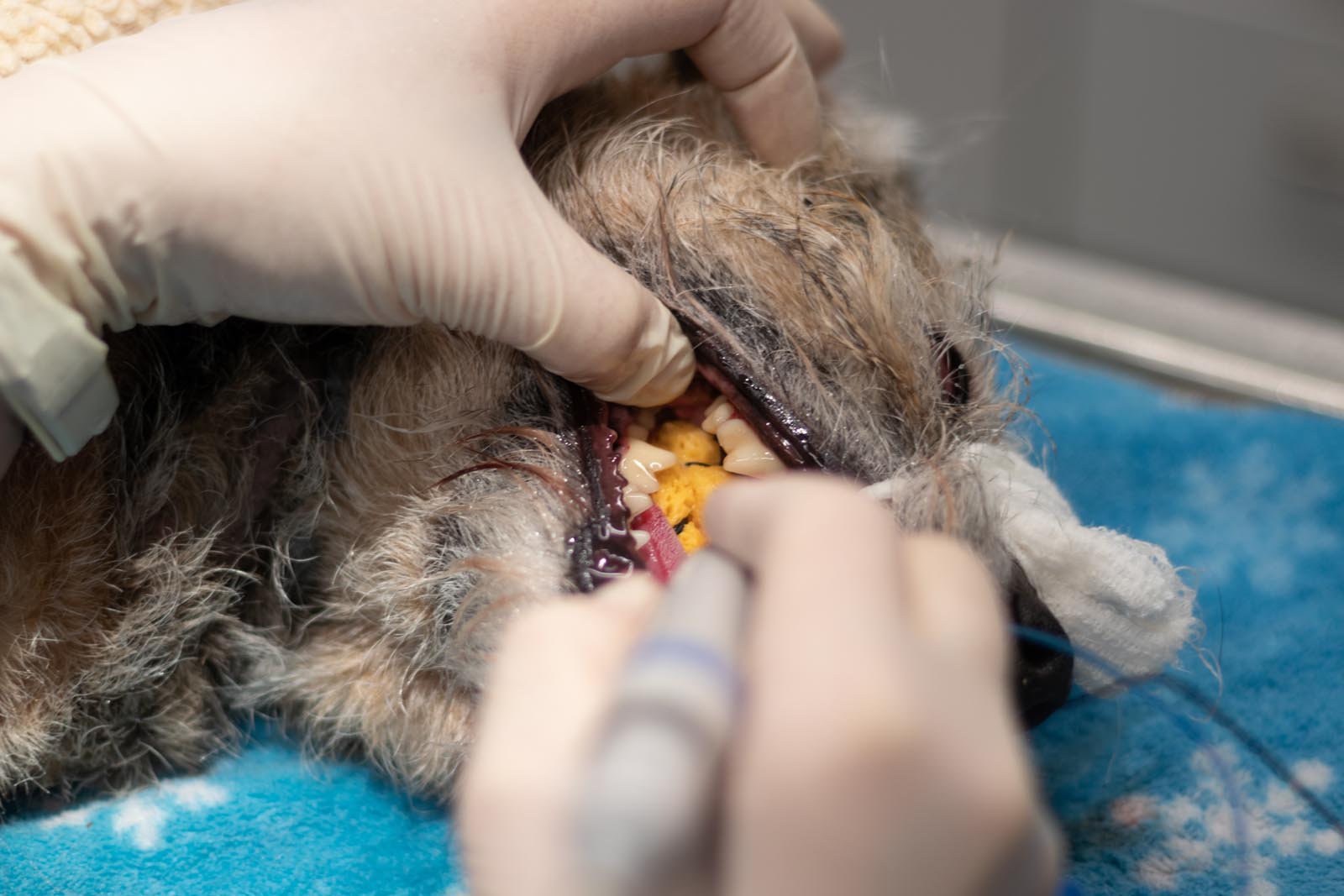
At Oakhill Vet Group, cats and dogs requiring dental attention under general anaesthesia will have all teeth assessed, charted and de-scaled and polished, just like a typical visit to a human dentist. A treatment plan can then be implemented focussing specifically on your pet. We dispense a FREE antibacterial gel post operatively and follow up each case with a FREE dental consultation to ensure the ongoing care of your pet’s teeth.